My Journey of Navigating Maternity Leave in Academia
- Sophie Cox
- May 19
- 7 min read
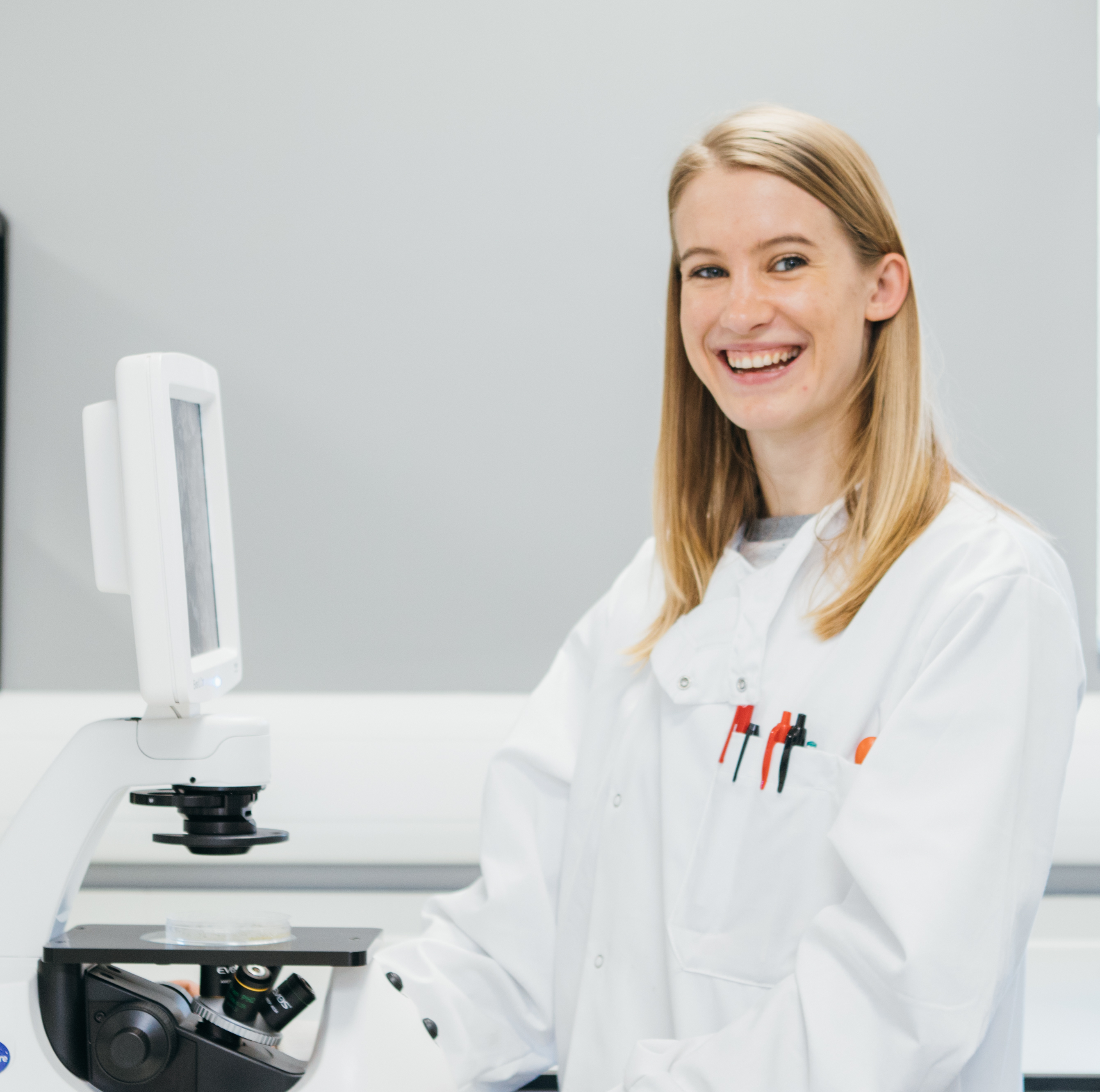
Dr Sophie Cox - Lead After Leave Project Co-Lead, Associate Professor and UKRI Future Leaders Fellow, University of Birmingham
I am using this blog as a way of introducing some of my experiences as a
mother within academia who since 2020 has taken two 1-year maternity leaves. My collective experience initiated the creation of what has grown into the
Lead after Leave Plus Fund. I hope you find something in this that resonates.
When I delayed the start of my FLF fellowship in 2020 to take my first maternity
leave, it felt both intimidating and entirely necessary. Fellowships in academia are
hard-won. To me securing my FLF represented validation and an opportunity to grow
my independence and accelerate momentum. To postpone felt like taking myself out
of the game but I wasn’t comfortable letting it begin without me at the helm and I felt it
would be unfair on my team to take on such a responsibility.
Becoming a Mother in a Pandemic
I became a first-time mother in 2020, in the thick of COVID. Like many families
during that time, we were navigating uncertainty on multiple fronts: regular changes
in hospital policies, my husband wasn’t allowed at my check-ups or NHS ultrasound
scans, isolation from extended family (I’d never felt like I needed my mother
more!), and the persistent background hum of global anxiety. On top of this our team
were pushing hard to contribute where we could, leveraging our 3d printing expertise
to support visor production and we invented a novel method for customisation of
FFP3 facemasks.
Gosh looking back there really was a lot going on!
On top of everything else, our daughter (Phoebe) was eager to join my 32nd birthday
party and entered the world nearly 7 weeks early.
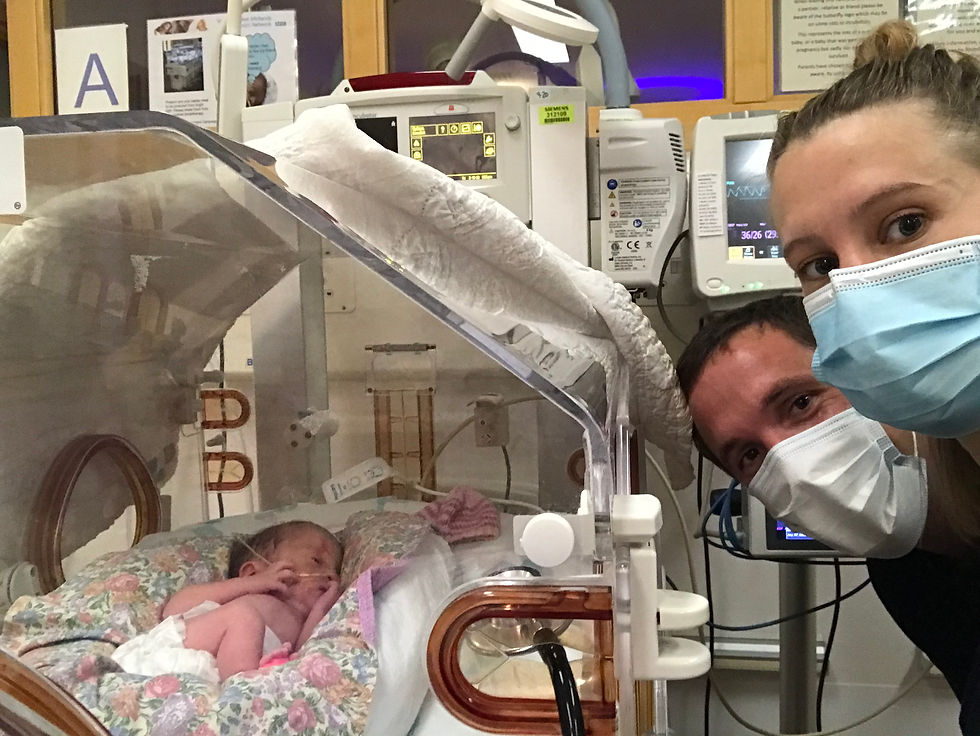
The thought that she would arrive on any other day apart from her due date hadn’t even entered my mind. I don’t think any first-time parent ever feels entirely prepared for the world shifting experience of bringing a child into the world.
This was amplified with Phoebe’s early arrival, I hadn’t finished handing over everything at work, I still had a long to-do list of professional and baby things, and the intensity of living in hospital for 10 days was all-consuming. I was so lucky to have supportive senior colleagues who without question provided additional guidance for my team, allowing me to concentrate entirely on our daughter.
Reflecting now, delaying my fellowship was not just practical; it was protective. It allowed me to focus on becoming a mother without the simultaneous
pressure of proving myself as a future leader.
While I was on maternity leave, research fellows in my team sent me monthly
updates on our projects and progress of students they were supporting. From my
perspective this worked really well, the frequency was enough for me to still feel in
the loop but remain present in family life.
Never Quite “Back in the Saddle”
When I returned from my first maternity leave, I did so knowing two things with
certainty: I loved being a mother, and I wanted more children.
That clarity was grounding — but it also complicated my relationship with work. I felt
as though I never quite got “back in the saddle.” Just as I began rebuilding
momentum — reestablishing connection with my team and collaborators, making
decisions about research challenges, pushing outputs forward — I was acutely
aware that to have more children meant to step away again.
There were a number of unpredictable issues that had arisen while I was away that
as a team we hadn’t prepared for. One of the biggest related to a grant on which I
was the only investigator, meaning that someone had thought it was acceptable to
‘pause it’ while I was on leave. Luckily the research fellow was still paid a salary but
he had no access to consumables or facilities budgets! Apparently, I was meant to
have nominated another investigator in my absence but no one from the funding
organisation or my own institution had told me that…
Sorting out these issues, even just getting back into IT accounts took a lot of effort at
a time when I wanted to focus on the most important thing, my team. While
collaborators had stepped in to project manage, the team had been without a leader
and I could recognise that they needed to be heard. We came together frequently to
reignite the supportive and highly productive growth environment that I am so proud
of in the group.
What really helped me was that several of the team members had worked with me
for a while before I took maternity. This meant we already had a depth to the trust
and respect in our professional relationships. Two of my team members also already
had children and this offered us a mutual understanding of how my life behind the
scenes had transformed. That said, having a reasonable sized team with a number
of research fellows meant several people’s contracts were coming to an end.
Since I hadn’t written any new grants on my maternity leave (despite having several
colleagues suggest this is what I should have been doing) made me feel like I was
on the back foot in offering the team continuity. We pushed to get some applications
in but unfortunately, they were unsuccessful meaning that the size of my team
shrank, which I felt quite de-motivated about at the time, despite having THE
fellowship.
A Full-Term Birth and a Different Experience

When I became pregnant with our second daughter (Felicity), the experience was
emotionally different from the start. There was joy, of course — but also a lingering
memory of the first time: the prematurity, the fragility, the intensity.
Carrying her to full term, just about (38 weeks), was deeply healing.
There is something profoundly restorative about a
birth that unfolds without crisis after one that didn’t.
Despite this emotional shift, many of the structural
questions remained the same.
The Same Questions, More Confidence
Second time around, I still found myself asking:
What support is actually available to me?
How does my fellowship handle parental leave?
Do I need to make any changes to grants?
How will I manage my team while I’m away?
Who can I ask to support them?
The information was not always clearly signposted and even more exhausting was
that the emphasis was on me to figure it all out. Policies existed, but translating them
into lived academic reality required interpretation. What does “pause the clock” mean
in practice? How do you balance formal entitlements with informal expectations?
Second time around the difference wasn’t the absence of uncertainty — it was my
confidence in navigating it.
I asked more direct questions. I initiated conversations earlier. I was clearer about my boundaries. I had a better idea about what I would need and how to support my family and my team.
Still, I couldn’t help but reflect: why were these questions so persistent? Why did so
much of the navigation depend on individual confidence rather than systemic clarity? Why was there no proactive support for something so predictable and life changing?
Mentoring Before Leave: A Turning Point
One of the most transformative elements of my second maternity leave experience
began before I even stepped away.
In the lead-up to my leave, I sought mentoring. Not informal reassurance over coffee, but intentional, structured conversations about
leadership, delegation, and identity. Together, we unpacked practical questions:
How do I prepare my team for my absence?
What does shared leadership look like in practice?
How can I frame this leave as continuity rather than disruption?
Mentoring shifted my perspective from “stepping away” to “leading differently.”
Instead of seeing maternity leave as a void, I began to see it as a leadership
transition. I clarified roles within my team. I empowered others to step forward.
This preparation didn’t eliminate the challenges — but it replaced anxiety with
strategy.
Coaching on Return: Rewriting the Narrative
If mentoring prepared me to leave well, coaching transformed how I returned.
The return from maternity leave can be disorienting. Your inbox is full. Projects have
evolved. Your identity has shifted — subtly or profoundly. You are both the same
person and not the same person.
Coaching created space to articulate that shift.
Rather than rushing to “catch up,” I reflected:
What kind of leader do I want to be now?
What boundaries matter most?
What does success look like?
It was transformative because it reframed return not as recovery, but as redesign.
I stopped trying to replicate my pre-children productivity patterns. Instead, I focused
on clarity, prioritisation, and impact. Paradoxically, this often made my work more
strategic. Less reactive. More aligned.
Motherhood had sharpened my time awareness, my empathy, and my decisiveness.
Coaching helped me integrate those strengths into my academic identity and
supported me to lead my team with confidence and clarity.
What I’ve Learned
Looking back across two maternity leaves — one during a global pandemic with a
premature baby, one more medically straightforward and emotionally restorative — a
few themes stand out.

First, timing is rarely perfect. Careers can flex more than we think. Becoming a
parent is transformative in many ways and the strengths you find on sleep deprived
nights with a screaming baby can be usefully transferred into your professional life.
Second, the narrative of “bouncing back” is unhelpful. For those who plan multiple children, there may not be a clean return between leaves. That doesn’t signal lack of commitment. It reflects the reality of family life.
Third, information gaps persist. Policies are necessary but insufficient. Institutions need clearer pathways, proactive communication, and cultural
permission for researchers to ask questions.
Finally, structured support matters. Mentoring before leave and coaching on return were not luxuries — they were catalysts. They transformed my experience
from reactive to intentional.
Leading After Leave
Parental leave in academia is often framed as a break. My experience suggests it
can be a developmental chapter.
It exposes weaknesses in systems. It surfaces hidden expectations. It demands
better leadership — from institutions and from ourselves.
Most of all, it invites a reframing: stepping away does not mean stepping back.
I did not return to the same version of myself after either maternity leave. I returned
more deliberate, more boundaries, more aware of what truly matters — at home and
at work.
That, to me, is what it means to lead after leave.

Comments